
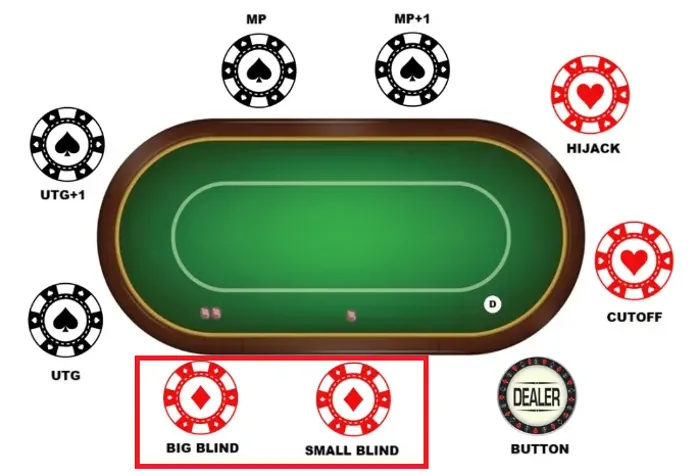
One of the keys to mastering poker is to understand the different positions at the table, especially the big blind and the small blind, as these positions are crucial in the dynamics of the game and can determine the success or failure of a hand. The big blind and the small blind are mandatory bets that are made at the beginning of each poker hand. These bets start the game and ensure that there is money in the pot from the beginning. In this article, we will learn more about these positions.
The blinds in poker
In poker, the game begins with the blinds (big and small), which are forced bets made by players in certain positions at the table. These bets serve as the engine of the game, ensuring that there is always money in the pot and that the action gets going, thus setting the pace of the game.
Blinds play a crucial role in poker because they create action by ensuring that there are always chips in the pot, which incentivizes players to compete for it, and they also balance positional advantage by forcing players to put money into the pot before seeing their cards, which somewhat evens out the advantage for those in later position. Mandatory blinds can pressure players into making riskier decisions, especially when the blinds increase in tournaments.
Small blind
The small blind is a unique and challenging position at the poker table. It is the first mandatory bet and is usually half of the big blind. The person sitting immediately to the left of the button (the dealer) is the one who posts the small blind. Here bets are placed without having seen the cards, which can put the player at a disadvantage. However, there are strategies to play effectively from this position.
From the small blind, it is best to keep the pot small when you have a marginal hand, unless you get a very strong read from your opponents. Since you have already invested a portion of the pot, it is often worthwhile to see the flop with a reasonable hand. However, it is crucial to be selective and not waste chips on weak hands.
After the flop, being in the small blind means that the player acts first in the following betting rounds. This can be a disadvantage, so it is important to play cautiously and use the information gained from the opponents' actions.
Big blind
The big blind also presents unique challenges and opportunities. It is the second mandatory bet and is twice the size of the small blind. The player sitting to the left of the small blind must post the big blind.
Being in the big blind allows you to see how all the players are acting before deciding. Using this information to assess the strength of your opponents' hand is crucial, for example, it can sometimes be beneficial to play more aggressively from the big blind, especially if your opponents are weak or playing conservatively. In this position one of the key skills is knowing when to defend the blind. This means not automatically folding to every raise and assessing whether the hand warrants a defense.

Advanced Blind Strategies
For more advanced players, understanding and using complex blind strategies can make a huge difference. You must internalize that every poker table is different; because of this, it is crucial to observe and adapt to your opponents' tendencies and patterns in order to develop an effective blind strategy.
Bluffing from the blinds can be effective, especially when opponents expect a player in the blinds to have a weak hand. Also, making an aggressive 3-bet from the big blind can discourage opponents from trying to steal the blinds and provide valuable information about the opponents' hands.
Common mistakes
Even experienced players can make mistakes from the blinds. It’s easy to fall into the trap of playing too many “weak hands” from the blinds due to pre-investment, because of this, it’s important to be disciplined and selective. For example, many players don’t adjust their play post-flop and continue betting without a strong hand. Because of this; evaluating board texture and hand strength is critical. The same goes for underestimating your opponents’ skills or reads, as this can be costly, so it’s always important to be vigilant and not take anything for granted.
Blinds in Tournaments
In poker tournaments, blinds play an even more critical role due to their progressive increase. As the blinds go up, the pressure on players increases, requiring constant adaptation in strategy. It is therefore essential to manage our bankroll effectively in order not to get caught out when the blinds go up, this includes adjusting bets and playing more conservatively when necessary.
In the later stages of the tournament, the big blinds can represent a significant portion of players' chips. At this stage, adapting the strategy to be more aggressive and take advantage of any opportunity is crucial to success.
What do you think about this topic? Do you want to know more about blinds in poker?
If you want to find the best room to play online poker, you can contact us by visiting the following link.