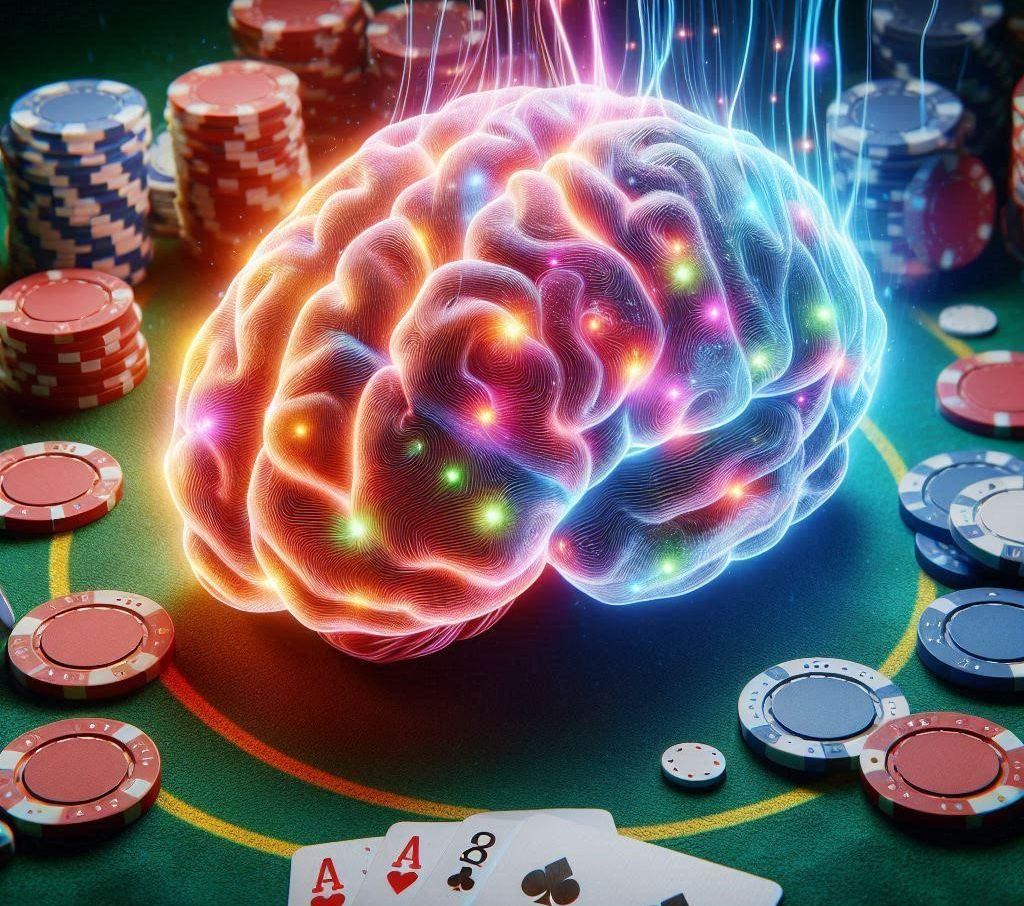
Poker is not just a card game; it is a “complex” cognitive exercise that activates multiple areas of the brain. From decision-making in the prefrontal cortex to emotional regulation in the amygdala, poker offers a unique opportunity to exercise and develop various cognitive skills. Understanding how the brain activates and adapts during the game can not only improve player performance but also offer valuable insights into the nature of human cognition. In this article, we will learn more about the brain regions that are put into action when playing poker.
The prefrontal cortex
The prefrontal cortex is one of the most crucial areas of the brain in the game of poker. This region, located at the front of the brain, is responsible for decision making, reasoning, and planning. When a player analyzes his cards and compares them to his opponents’ possible hands, the prefrontal cortex is hard at work processing the information and formulating a strategy.
The prefrontal cortex is activated to assess probabilities, consider risks, and make informed decisions. In poker, every action, from betting to folding, involves a strategic decision. This area of the brain is vital for anticipating opponents’ moves and determining the best response.
Risk management is an essential skill in poker. The prefrontal cortex helps players assess the risk-reward ratio in each hand. Making decisions based on probability and intuition requires constant activation of this region.
The hippocampus
The hippocampus is a structure located in the temporal lobe of the brain, which plays a fundamental role in memory and learning. In poker, remembering the cards that have been played, the tendencies of opponents and past strategies is crucial for success.
Working memory is the ability to hold and manipulate information in the mind for a short period of time. In poker, players use working memory to remember cards they have seen and keep track of bets. Long-term memory is also important in poker. Learning from past experiences and applying that knowledge to future games requires activation of the hippocampus. The ability to learn from mistakes and adjust strategies is essential to becoming a successful player.
The amygdala
The amygdala is a small structure in the brain that is involved in processing emotions. In the context of poker, the amygdala helps players manage stress and intense emotions that can arise during a game. The amygdala plays a crucial role in regulating emotional responses and maintaining a balanced mental state. Poker can be an emotionally draining game, because of this, players must learn to manage their stress and stay calm, even when the pressure is high.
In addition to managing their own emotions, poker players must also read the emotions of their opponents. Reading facial expressions and body language can provide valuable clues about other players’ hands. The amygdala, in combination with other areas of the brain, is essential for this emotional sensing skill.
The parietal cortex
The parietal cortex, located at the top of the brain, is responsible for spatial perception and attention. In poker, staying focused and following the dynamics of the game are key aspects. Selective attention allows players to concentrate on relevant information and filter out distractions. The parietal cortex is activated to ensure that players are attentive to bets, opponents’ moves, and the cards on the table.
Although poker is a card game, spatial awareness is important for mentally organizing information and planning moves. The parietal cortex helps players visualize possible card combinations and anticipate opponents’ strategies.
The basal ganglia
The basal ganglia are a set of nuclei in the brain that are involved in automating processes and executing moves. In the context of poker, the basal ganglia facilitate the fast and efficient execution of actions, such as handling chips and placing bets.
As players become more experienced, many of the actions in poker become automated. The basal ganglia allow players to make precise, quick moves without having to consciously think about each step. Fine motor control is essential for skillfully handling chips and cards. The basal ganglia work in conjunction with other areas of the brain to coordinate these movements and ensure they are performed efficiently.
Benefits of poker for the brain
By facing complex situations and making decisions under pressure, poker players develop faster and more accurate decision-making skills. On the other hand, poker requires great concentration to keep attention on the table and avoid distractions. Another benefit is improved memory, as by remembering the cards played, opponents’ bets, and table tendencies, players strengthen their memory.
Poker also helps develop creativity, as creative thinking is essential in a game to find new strategies and solutions to complex problems. Poker also helps to have better emotional management, as the player must learn to control different emotions such as frustration and excitement, due to this, advanced poker players tend to develop greater emotional resilience.
What do you think about this topic? Do you know of any other areas of the brain that are activated by poker?
If you want to find the best room to play poker online, you can contact us by visiting the following link.