Phil Ivey, known as one of the greatest poker players of all time, has a fascinating story that began in his childhood and adolescence. His path to poker greatness was marked by key moments that shaped his character and skills. In this article, we’ll learn more about the early years of this outstanding poker player.
Talent since childhood
Phil Ivey was born on February 1, 1977, in Riverside, California, but it was in Roselle, New Jersey, where he spent his formative years. He grew up in a working-class environment that, although modest, instilled in him fundamental values for his future. From a very young age, Ivey displayed a fascination with strategy games. His grandfather, affectionately called “Dad,” recognized this inclination and taught him to play five-card draw poker when he was just 8 years old.
These casual games, with small bets of five cents, were not only a form of entertainment but also the beginning of his development as a gambler. These early experiences around the card table awakened in young Phil an exceptional analytical mind and an innate ability to calculate probabilities.
The development of a competitive mind
During his childhood, Ivey didn’t just excel at poker. His intellectual curiosity led him to master other games such as backgammon, chess, and dominoes, demonstrating uncommon versatility. His friends from that time remember him as a quiet yet intensely competitive child, always seeking to understand the rules and strategies of any game presented to him. This combination of outward calm and fierce inner determination would later become his hallmark at the professional poker tables. His family noticed he had a knack for assessing risks and making calculated decisions, qualities that would later define his legendary playing style.
Adolescence: the awakening of a passion
As he grew older, Ivey sought out bigger challenges. At 16, when many teenagers thought of sports or parties, Ivey was already immersed in the world of Texas Hold’em. During this time, he began playing poker with his classmates in New Jersey. What began as casual games with friends soon grew into a passion.
However, his true passion for gambling led him to seek competition in real-life casinos. With a determination that would characterize his entire career, Ivey and some companions forged IDs to gain access to Atlantic City casinos. Using the name “Jerome Graham” (borrowed from a friend of his father’s), the young prodigy began trying his luck at real tables, where his natural talent quickly caught the attention of experienced players.
Learning on the Battlefield
These early forays into Atlantic City were both educational and painful. Ivey suffered significant losses that would have deterred most beginners, but he viewed each defeat as a lesson. Veteran players like “Yugi” became his informal mentors, teaching him not only advanced strategy but also emotional control to handle the inevitable “losing streaks.” This practical education, combined with his obsessive study of the game, formed the basis of what would become one of the most well-rounded playing styles in poker history.
Formal Education vs. Poker
After graduating from high school, Ivey attempted to follow the conventional path. He enrolled in community college and took a job at a call center, but soon realized his true passion lay in cards. A turning point came when he won $2,500 in a local tournament, a significant sum for a young man his age. It was then that he made the decision that would change his life: abandoning his studies and traditional work to dedicate himself completely to poker. Although his parents initially opposed it, Ivey’s determination was unwavering.
The lessons that forged a champion
Ivey’s childhood and adolescence were instrumental in developing the qualities that would make him famous. From his grandfather, he learned that poker wasn’t a game of luck but rather of strategy and patience. His early experiences in Atlantic City taught him to remain calm under pressure, forging his legendary “poker face.” Perhaps most importantly, he developed a relentless work ethic, studying the game even when he was winning, which allowed him to master multiple poker variants with a depth rarely seen.
Although Ivey displayed a natural talent for poker, his early years in the professional game were filled with challenges. Experienced players such as Daniel Negreanu and Barry Greenstein noted that Ivey’s playing style was overly risky and his money management was poor. These criticisms, far from discouraging him, motivated him to improve and develop a more solid strategy.
From child prodigy to living legend
Today, with over $38 million in tournament earnings and 10 WSOP bracelets, Phil Ivey is universally recognized as one of the greatest poker players of all time. But as his story shows, this success was no accident. It was the result of a natural talent cultivated since childhood, an unwavering work ethic, and the ability to learn from every experience—wins and losses alike. Ivey’s story proves that behind every great player lies years of dedication.
What do you think about this topic? Want to know more about Phil Ivey?
If you want to find the best platform to play online poker, you can contact us by visiting the following link.
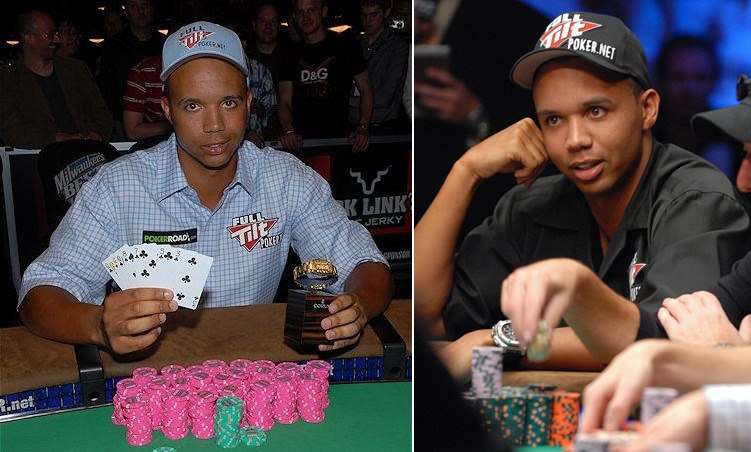
Image by Flipchip via Wikimedia.org under Creative Commons license